Master the Earth-Bound Alchemy of the Korean Seasons
 The Experience
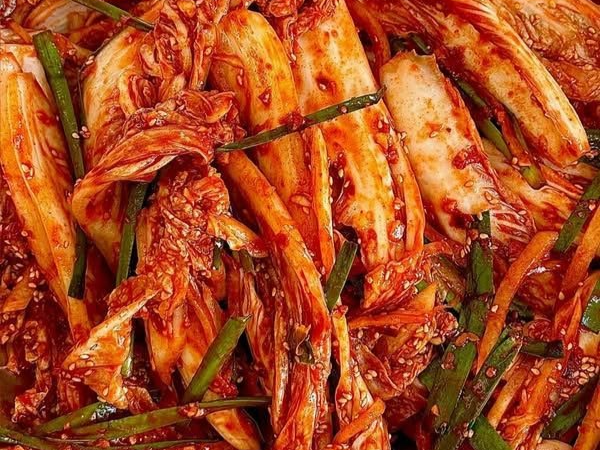
Ahead of the winter freeze across the Korean peninsula, the seasonal practice of gimjang structures late-autumn agricultural preservation around strict saline titration and anaerobic storage. Halved heads of baechu cabbage are soaked in coarse solar sea salt (cheonilyeom) aged to eliminate bitter magnesium runoff, breaking cell walls without collapsing leaf turgor. The salted foliage is layered with a curing paste of sun-dried red pepper powder (gochugaru), fermented baby shrimp (saeujeot), yellow croaker brine, grated radish, and minced cold-hardy garlic, calibrated to sustain slow lacto-fermentation over months of sub-zero temperatures.
The biological stabilization depends on the material composition of onggi—hand-thrown, coarse earthen jars micro-porous enough to exchange atmospheric gases while blocking water ingress. Within the flagstone courtyard of a heritage hanok in Jeonju, the vessels are submerged up to their shoulders in insulation pits packed with straw and bare topsoil, dampening thermal swings to hold core temperatures near four degrees Celsius. The study examines acid accumulation curves, wild Leuconostoc bacterial colonies, and regional salinity variations across southern maritime fish bases and northern Buddhist mountain monastery recipes—a cold, analytical engagement with peninsular agrarian storage, ceramic porosity, and subterranean fermentation science.
Location & Clearance
Jeonju Hanok Historic Enclave & Soyang Fermentation Terraces · North Jeolla Province, Republic of Korea
Private Hanok Cellar Clearance · National Food Grandmaster & Fermentation Microbiologist Escort · Restricted Onggi Basin Access



Add This Experience to Your Journey
Tell us your dates and we'll weave this into your bespoke itinerary.