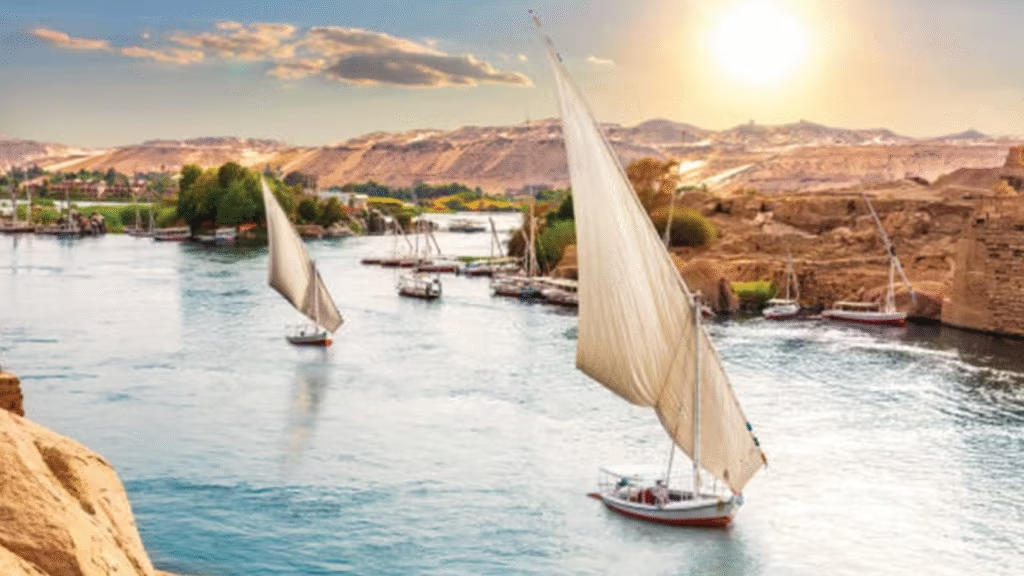
The family arrives in Cairo and takes a first evening on the Nile itself, a felucca leaning into the breeze on the river that made the whole of Egypt possible, the city’s lights coming on along the banks. It is a gentle, fitting beginning to a journey that will follow this same river three thousand years and a thousand kilometres into the past.
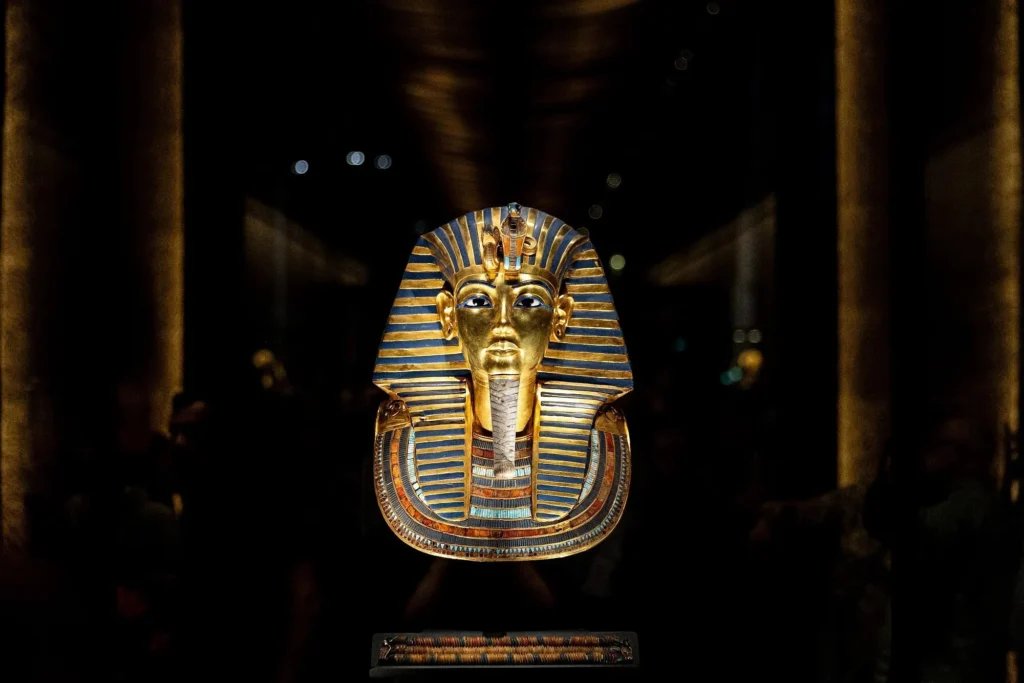
The Pyramids and the Sphinx in the cool of the morning, early and with camels for the children to ride out to the classic view, the last wonder of the ancient world standing vast against the sky. In the afternoon the treasures of Tutankhamun await in the great new museum, the gold, the scale, the strangeness of it all suddenly real and close, the boy-king’s face gazing back at a family that has crossed the world to meet him.
A short flight carries the family to Luxor and aboard the cruiser that will be home for the coming nights, and straight into Karnak, a forest of columns so vast and so tall that everyone walks through it with their heads tipped back, the greatest religious building of the ancient world, raised and added to across two thousand years of pharaohs.
The painted tombs of the pharaohs, cut deep into the rock of a desert valley and still glowing with colour after three thousand years, the hieroglyphs and gods as fresh as if the painters had just set down their brushes. As night falls Luxor Temple is lit against the dark, a day spent among the dead that feels, somehow, intensely and unforgettably alive.
A day given to the river itself, the cruiser sailing south with the desert sliding past on either bank, stopping at the temple of Edfu, reached by horse-drawn carriage, and at Kom Ombo poised on its bend in the Nile. The pace is that of the current, the great temples punctuating a day of watching Egypt drift by from the deck, exactly as travellers have done for centuries.
Ashore at Aswan, you arrive at the legendary Sofitel Legend Old Cataract, the grand Victorian palace overlooking the Nile that has welcomed royalty, explorers, and celebrated writers for more than a century. Among its most famous guests was Agatha Christie, who stayed here while writing parts of her iconic novel Death on the Nile, inspired by the timeless beauty of the river stretching beyond the hotel’s famous terrace. A felucca carries the family to the island temple of Philae, before a boat journey continues to a vibrant Nubian village, where the colourful homes, warm hospitality, and rich traditions reveal a softer, more intimate side of southern Egypt.
An early flight carries the family to Abu Simbel, the colossal rock-cut temple Ramesses II carved to his own glory, its four seated giants gazing out over the desert, a monument so vast that in the 1960s it was cut apart and moved stone by stone to save it from the rising waters of Lake Nasser. Returning to Aswan, the afternoon is left at leisure to enjoy the gardens and river views of one of Egypt’s most iconic hotels.
A slower final day allows the family to absorb the beauty of Upper Egypt at its own pace. Wander through the lush Botanical Garden on Kitchener’s Island, browse Aswan’s colourful souk for spices and handcrafted treasures, or simply relax beside the Nile before one final evening overlooking the river that has accompanied the journey from beginning to end.

A final morning on the banks of the Nile before your master chauffeur provides a comfortable executive transfer to Aswan Airport for your onward flight.