In short. Beyond five-star, the scarce thing is access: a monument after the gates close, a garden the public never enters, an hour with the person who looks after it. Comfort can be booked by anyone. Access has to be arranged, one door at a time, and it is what a well-travelled person remembers.
You have stayed in the good hotels. You know what the suite looks like before you open the door, and so does everyone you know. At some point the room stops being the reason to go.
What replaces it is harder to put in a brochure. It is the difference between visiting a palace and being let into it.
What does a five-star rating no longer give you?
A rating describes a building: the size of the room, the spa, the number of restaurants. All of that can now be compared and booked from a phone in a few minutes.
That is good news for comfort. It also means that whatever anyone can book, a great many people have already done. The room is excellent and it is the same room your colleague had in March.
The rating also says nothing about your day. It cannot tell you whether you will stand in front of something old and be allowed the time to look at it.
What does unseen heritage mean in practice?
Three things, and they are concrete.
A place after hours. By day a famous monument is shared: a queue, a guide speaking over another guide, a room you leave because the next group is waiting. After closing it is a different building. In Oman, where we are based, dinner can be served by candlelight inside a 17th-century citadel once the public has gone. In Granada, we take you up to the rooftops of the Alhambra after closing. The walls are the same ones the morning visitors photographed. What changes is that you can hear the place.
A place the public does not enter. Many old sites keep a courtyard, a roof or a garden closed, because it is fragile or because nobody has asked. Whether it can be opened is decided by the people responsible for it, one request at a time. A closed door is often the most interesting thing on the site, since it is closed for a reason somebody can explain to you. In Amman, that somebody stands with you inside the Umayyad citadel.
A person. The conservators who look after Oman’s forts and old houses. The people who distil rosewater on Jebel Akhdar. The keepers of the perfume archives in Muscat. An hour with someone who has spent a working life on one building tells you more than a day of plaques.
Each of these is a door, and somebody has to be trusted before it opens. Our page on travelling on your own terms describes these private encounters: a historic courtyard to yourself, rare calligraphy studied with a master scholar.
How do you tell real private access from a ticket?
The words “private” and “exclusive” are printed on a great many tickets. Five details separate the real thing from the label.
The hour. Real access happens when the site is closed. “Early entry” and “skip the line” put you in the same rooms with fewer people, which is pleasant and is a different product.
Who gives permission. The authority that runs the site, by name. A reseller cannot open a door it does not hold the key to.
The number. How many people will be inside, written down. “Small group” is not a number.
Who walks with you. Someone attached to the place, a custodian, a conservator, a historian who works there, will show you what a general guide has only read about.
What happens if it falls through. Permissions are withdrawn sometimes: a restoration, an official visit, the weather. An honest offer says what replaces the evening.
If an offer cannot answer all five, treat it as a good ticket and pay for it as one.
Why does one object teach more than a full day of sights?
Most cultural itineraries are built like lectures. Ten sites, a date for each, and by evening you remember the bus.
We would start from the other end: one thing you can hold, and let it explain the place.
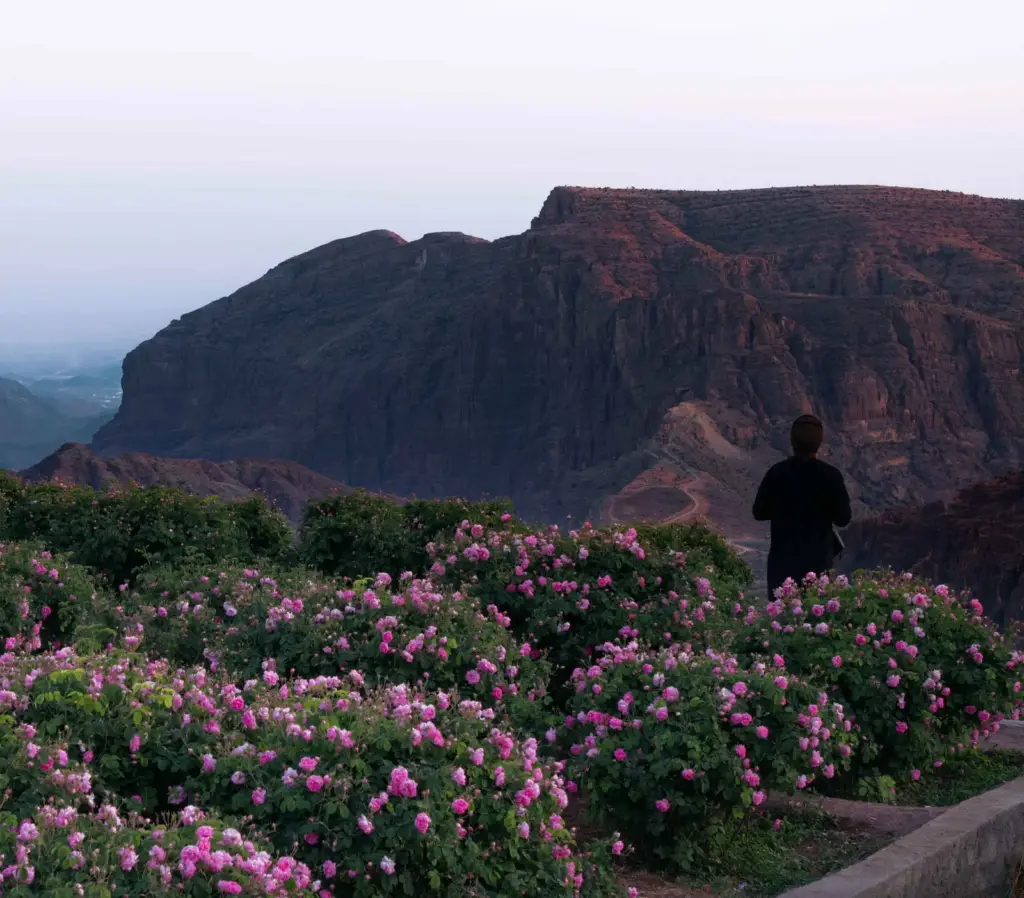
On Jebel Akhdar that thing is rosewater. You stand among terraced rose fields and mud-brick villages, under peaks that rise above 3,000 metres, and you watch it made. From that single bottle the mountain starts to make sense: why the terraces are cut where they are, how water reaches them, what the village sells and what it keeps for itself.
Ask to meet whoever runs the still, and to stay until the first bottle is filled.
The test works anywhere. Before a trip, pick one object for each place: a door, a tool, a dish, a manuscript. Ask whoever plans your trip to build half a day around it and around a person who understands it. If they answer with a list of ten sights, you have learned how they work.
History is dense. A trip should still feel light.
How is this kind of access arranged?
Slowly, and by people who are known locally. Access of this kind is not sold on a booking site. It depends on the authority that manages the site, the season, and whether the custodian trusts whoever is asking.
LuxOrient has its headquarters in Muscat, with its own team on the ground. In Oman, doors open through local knowledge and relationships built over time.
It also takes time, which is a reason to start early. A request made a few days before arrival usually gets the answer that is easiest to give.
Ask any travel company for one access that fell through and what it arranged instead. A company that does this work has an example ready.
The same care applies to what you never see. The table suits how you eat. No animal is kept for show. You should not have to ask for either.
Who is this way of travelling for?
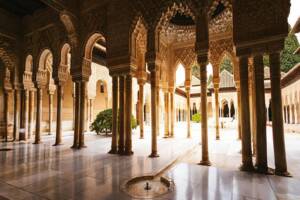
Someone who would rather know one valley well than photograph six countries. We suggest a slow pace, seven to ten days, with few changes of bed and long stretches with nothing planned. Our seven-day Al-Andalus itinerary through Moorish Spain shows what that looks like on paper.
A traveller who wants every hour filled will be happier elsewhere. Privacy and time are the point, and a crowded schedule removes both.
On the flight home, ask yourself what you would now tell a friend about how you want to travel, and what you will no longer accept.
Before you plan a trip to Oman, read your own government’s current travel advice.
Questions we are asked
What is after-hours access? Entry to a monument, museum or garden once it has closed to the public, usually with a historian or the site’s own custodian. You see the same walls as everyone else, without the crowd and with someone who can answer questions.
Can any monument be opened privately? No. It depends on the authority that runs the site, the time of year and the size of your party. Before you commit to any trip, ask which visits are confirmed in writing and which are still a request.
How long should a heritage trip be? We suggest seven to ten days at a slow pace. Shorter is possible if you keep to one region and one or two places to stay.
What does it cost? Each tour page on our site shows an indicative range. Your own figure comes with your proposal, because every itinerary is drawn from a blank page.
Start with one door
Name the one place you have always wanted to see without the crowd, and the question you would put to the person who looks after it. Send us both. We reply within one business day.
Request a private consultation
LuxOrient Travel, Muscat. Bespoke Luxury Travel, Bridging Cultures, Respecting Values.